

For Homeowners in Contra Costa and Alameda Counties
Already Decided on Solar? Compare Equipment & True Costs
Since 2014, Bill Gurgol has personally helped more than 1,000 East Bay families lower or mostly eliminate their PG&E bill, earning a 4.9-star average across 132 Google reviews for his follow-up before and after installation. He works with GOT WATTS Electric & Solar, Diamond Certified for over 10 years, rated 4.8 out of 5 by 451 surveyed customers, and a Solar Insure Elite Provider, a status Solar Insure reserves for only a few of its certified installers nationwide, which means your system can be protected for 30 years by Zurich, an insurer that has been paying claims since 1872, seven years before Edison's light bulb.
If you have held off on solar because of the horror stories, this page shows you, with sources you can check, exactly how to avoid them.
No pressure, no sales script. Upload a bill, get an instant estimate from your roof and shading, then we book 30 minutes to dial it in together with a consultant who has been doing this in the East Bay since 2014.
This page is for homeowners who've already decided to go solar and want to know which panels, installer, and mounting hardware to trust. Still deciding if solar is right for you? See how solar affects your bill first.
What You're Actually Getting, Before You Scroll
- Your warranty is backed by an insurance carrier, not just a manufacturer, so it survives even if GOT WATTS or the panel maker doesn't.
- Your consultant, Bill, has been doing this since 2014, more than a decade, and has already stayed with over 1,000 East Bay customers through their first bill review and beyond. That's not a promise, it's a track record you can check.
- Solar is low maintenance when it's installed right the first time, with durable equipment and installers committed to their craft.
- Every claim on this page is sourced, so you can verify it yourself instead of taking our word for it.
If you want the specifics, here's where to find them:
8%
Average yearly increase in PG&E residential rates since 2014 (7.6% to 8.7%). Verify at pge.com/tariffs
pge.com/tariffs30 yr
Solar Insure SI-30 protection with a $0 deductible, backed by Zurich North America, an A.M. Best A+ rated insurer.
solarinsure.comWhy This Page Exists
You already know the rates are going up, and you've probably already decided you want solar. This page is about who you trust to install it.
Do You Believe History Repeats Itself?
PG&E's own published rate history, verified at pge.com/tariffs, shows what your bill has done every year since 2008. This tool takes that same trend and projects it forward, five, ten, even thirty years, starting from your own number instead of ours. If you haven't decided solar is right for you yet, this is the fastest way to find out, look at what your bill does if nothing changes.
See Your Rate Projection
Three installers can hand you three different invoices quoting the exact same panels and the exact same battery, and you can still end up with three completely different results. Some installers won't even tell you what equipment is going onto your roof, which leaves you thinking solar is a commodity. It isn't. The commodity is the kilowatt-hours your system actually produces, not the hardware sitting on top of your house. This page covers what a quote doesn't: what actually goes on your roof, who installs it, and who's still standing behind it in year twelve, or year twenty-nine. Those three things decide whether solar is the best decision you ever made for your home or a story you tell at parties. We compare the panels, the warranties, and the installers side by side, with sources you can check.
Two honest things before you scroll. The cheapest invoice and the cheapest system over 30 years are almost never the same thing. First, PG&E charges every customer a $24 fixed fee no matter what, solar or not, and plenty of consultants never mention it. A properly sized system wipes out everything but that fee for about eight months a year; November through February are harder, with the fewest sun hours and the highest usage, and we'd rather tell you that now than have you find out in January. Second, we are usually not the lowest bid. The three sections below show exactly what the difference buys you.
Panel comparison: Tesla vs. Hyundai vs. REC
Panel Terms, Plain English
- Heterojunction (HJT):
- A cell design that layers two different materials together to capture more sunlight and lose less power as the panel heats up.
- TOPCon:
- A newer cell design that traps more of the electricity a cell generates instead of losing it internally.
- N-type:
- The base material a solar cell is built on. N-type cells generally degrade slower over the decades than the older, more common P-type cells.
- Bifacial:
- The panel can capture a small amount of extra sunlight reflecting off the roof or ground onto its back side, not just direct sunlight on the front.
- PERC:
- An older, widely used cell design, the industry's baseline. It's the "Standard Solar Panel" line you'll see in the degradation charts below.
Our Recommended Panel: REC Alpha Pure-RX

Dimensions: 68.0 x 47.4 x 1.2 in. Weight: 50.0 lb. Made in Singapore.
Temperature coefficient: -0.24%/°C, the best of the three panels compared here, which matters most in Dublin, Pleasanton, Livermore, and San Ramon summers. Guaranteed output: 92% at year 25. Annual degradation: 0.25% per year, the slowest of the three.
Hyundai HiN-T440NF(BK)

Dimensions: 67.8 x 44.6 x 1.2 in. Weight: 50.01 lb. Made in South Korea.
Module efficiency: 22.53%
Temperature coefficient: -0.30%/°C
Warranty: 25 years (product), 30 years (performance). Guarantees 87.4% of nominal power by year 30.
Annual degradation: 0.40% per year after year one.
View Hyundai's official datasheet (PDF)Tesla TSP-415 / TSP-420

Module efficiency: 20.3–20.5%
Temperature coefficient: -0.34%/°C
Tesla splits each panel into 18 independent power zones using a cascading cell design, compared to the 3 to 6 zones found in most half-cut panels. If shade from a chimney or tree branch falls on one small section, only that section loses power while the rest of the panel keeps producing. The same design hides the electrical connections beneath the glass for a uniform, all-black look.
Warranty: 25 years (product and performance). At least 98% of nominal power in year one, degrading to at least 87.2% of nominal power by year 25.
Annual degradation: 0.45% per year after year one.
Dimensions: 71.1 x 44.7 x 1.5 in (22.1 ft²) / 1805 x 1135 x 40 mm (2.05 m²). Weight: 49 lb / 22.2 kg. Origin: Assembled in Buffalo, New York.
View Tesla's official datasheet (PDF)A few extra inches in panel length can matter more than you'd think. Tesla's panel runs slightly longer than REC's or Hyundai's, and on a roof where space is tight, that difference can decide whether one more panel fits on your best, sun-facing roof plane or gets pushed onto a weaker one. That matters, because the same panel produces more power on your best-facing roof plane than it ever will anywhere else on your roof. It's a small design detail, but it can quietly cost you production for the life of your system.
Efficiency is the number every brochure leads with, and it is usually the least important one for a Bay Area homeowner. If you have the roof space, a slightly less efficient panel simply uses a little more of it. What actually determines what you get paid back over 30 years is how much output the panel loses each year (degradation) and how much it loses on a hot afternoon (temperature coefficient), because Contra Costa and Alameda summers are exactly when your panels are supposed to be earning the most.
The three panels compared are the ones a Bay Area homeowner is most likely to be quoted: Tesla's own TSP-415/420 module, HD Hyundai's HiN-T440NF(BK) N-type TOPCon module, and REC's Alpha Pure-RX 450 to 470 W heterojunction module. Every figure below is taken from the manufacturer's current published datasheet and warranty document.
Guaranteed production from a 10,000 kWh first-year system, degradation only
| Checkpoint | Tesla TSP-415/420 | Hyundai HiN-T NF(BK) | REC Alpha Pure-RX |
|---|---|---|---|
| Guaranteed output, year 1 (of nameplate) | 98.0% | 98.0% | 98.0% |
| Maximum annual decline, year 2 onward | 0.45% per year | 0.40% per year | 0.25% per year |
| Year 1 production | 10,000 kWh | 10,000 kWh | 10,000 kWh |
| Year 5 | 9,816 kWh | 9,824 kWh | 9,898 kWh |
| Year 10 | 9,587 kWh | 9,624 kWh | 9,770 kWh |
| Year 20 | 9,128 kWh | 9,224 kWh | 9,515 kWh |
| Year 25 (guaranteed % of nameplate) | 8,898 kWh (87.2%) | 9,024 kWh (89.4%) | 9,388 kWh (92.0%) |
| Year 30 | 8,668 kWh* | 8,874 kWh (87.4%) | 9,260 kWh* |
| 30-year cumulative production | 280,026 kWh | 282,744 kWh | 288,903 kWh |
These are warranty floors: the minimum output each manufacturer guarantees in writing, which is the number you can actually hold them to. Real panels usually do better. Year-1 baseline of 10,000 kWh, then each manufacturer's maximum annual decline applied through year 30. *Tesla and REC performance warranties end at year 25; their year-30 figures extend the same rate one more time and are not guaranteed. Hyundai's performance warranty runs the full 30 years.
Did you know that when the temperature reaches 77° on your rooftop, every degree above that will reduce the solar panel productivity?
Thermal Performance & Degradation: The Real Numbers
- Low Temperature Coefficient: Minimizes power loss when panels bake under peak summer heat.
- Controlled Year-One Drop: Accounts for the initial stabilization phase without sacrificing long-term yields.
- Predictable Linear Decline: Guarantees steady, reliable energy production year after year through decades of operation.
Don't Let the Heat Drain Your ROI: If your panels are losing output every degree above 77°F, you need to know your real-world production math.
See How REC, Hyundai & Tesla Actually Perform in the HeatHot-day performance: temperature coefficient
Panels are rated at 25°C (77°F) cell temperature. A rooftop panel in Walnut Creek or Livermore in July runs far hotter than that, and every panel loses output as it heats. The temperature coefficient tells you how much per degree. A smaller number is better.
| Measure | Tesla TSP-415/420 | Hyundai HiN-T NF(BK) | REC Alpha Pure-RX |
|---|---|---|---|
| Temperature coefficient of Pmax | -0.34% per °C | -0.30% per °C | -0.24% per °C |
| Output loss at 65°C cell temperature (a hot East Bay afternoon) | -13.6% | -12.0% | -9.6% |
| Rated module efficiency | 20.3% to 20.5% | 22.53% | 21.6% to 22.6% |
| Cell technology | Not stated on datasheet | N-type TOPCon, bifacial | Heterojunction, lead-free |
| Product (materials and workmanship) warranty | 25 years | 25 years | 20 years (25 with REC Certified installer) |
| Performance warranty | 25 years | 30 years (87.4% at year 30) | 25 years |
| Labor covered by the manufacturer | Only in the first 10 years, and only through a Tesla Certified Installer | No. Removal, reinstallation and disposal costs are excluded in any case | 25 years under ProTrust, only with an REC Certified installer |
Temperature loss is (65 minus 25) × the coefficient, shown separately from degradation so the two effects are not confused. Sources: Tesla Solar Panel Datasheet (2025) and Tesla Photovoltaic Module Limited Warranty (effective June 2, 2026); HD Hyundai Energy Solutions HiN-T440NF(BK) datasheet and U.S. Residential Limited Warranty; REC Alpha Pure-RX datasheet (U.S., April 2025).
The takeaway: on paper the three panels are within about 2 percentage points of efficiency, which on a roof with space to spare means one or two extra panels. The gaps that compound over 30 years are the ones nobody leads with: REC's guaranteed 30-year production is about 8,900 kWh more than Tesla's from the same starting point, Hyundai is the only one of the three that guarantees output in writing through year 30, and none of the three manufacturers pays for the labor to swap a failed panel without conditions. That last line is why the next section exists.

Warranty and protection: Solar Insure vs. a manufacturer-only warranty
A warranty is only as good as the company standing behind it on the day you need it. Most spec sheets list a warranty term but say nothing about who pays for the labor, the roof penetration, or the removal and reinstallation if something fails in year five, ten, or twenty.
Year 0 is the one nobody puts in a warranty, so here is ours in writing. From the day you sign, Bill stays in contact through permitting and scheduling, is on site the day of installation, and comes back the following month to sit down with your first PG&E bill with solar on it, because it reads differently and you should understand every line. Then the annual bill review continues for as long as you own the system.
Comprehensive Protection That Doesn't Leave You Hanging
- Full Labor & Parts Coverage: No hidden gotchas or out-of-pocket surprise bills when equipment fails.
- Backed by Zurich North America: Institutional financial backing protecting your investment for the long haul.
- Built for the 10-Year Mark: Engineered to outlast the typical warranty cliff where standard flashless systems fail.
Check Your Fine Print: Does your current quote guarantee labor costs after year five, or are you on the hook when standard warranties drop you?
Compare your warranty terms side by sideSolar Insure SI-30, backed by Zurich North America
- 30 years of coverage on panels, inverters, optimizers and racking, with a $0 deductible and no subscription or onboarding fees.
- Labor is covered, including removal and replacement of defective panels.
- Roof penetrations related to the solar installation are covered, including resealing and reflashing within 3 inches of the mounting hardware.
- Coverage sits with an A.M. Best A+ rated insurance carrier, not the installer, so it survives a manufacturer or installer going out of business.
- Registered to the address, not the owner, so it transfers with the home when you sell.
- Battery coverage is a separate plan, SI-30 Battery, also 30 years: parts and labor, including one replacement once capacity drops below 50% after the manufacturer's own warranty ends.
Manufacturer-only warranty
- Covers the part, usually not the labor to diagnose, remove, ship and reinstall it. HD Hyundai's U.S. residential warranty states it: "In any case, HYUNDAI will not cover any of the costs associated with the installation, removal, reinstallation, discarding or packaging of the MODULES." Tesla reimburses labor only in the first ten years and only through a Tesla Certified Installer.
- If the manufacturer opts for a refund instead of a replacement, it is depreciated. Hyundai's schedule deducts 16% in year one and 3.5% of the purchase price every year after.
- Roof penetrations typically fall under the installer's workmanship warranty, which is often 10 years or less and worth nothing if the installer closes.
- If the manufacturer is acquired, exits the U.S. market, or simply stops responding, the homeowner has no one else to call.
- Claims run through whoever installed the system. If that was a subcontractor of a national brand, expect finger-pointing.
Solar Insure names Zurich North America as the carrier behind its insurance-backed warranty on its own site, and Zurich carries an A.M. Best A+ financial strength rating. Letter of recommendation for Got Watts Electric from Ara Agopian, CEO, Solar Insure, October 28, 2025 (Certified Provider since 2019, Elite status).
What the difference is worth, in dollars
| Item | What it costs without protection | Under Solar Insure SI-30 |
|---|---|---|
| Extra guaranteed production, REC vs. Tesla, 30 years | 8,877 kWh, about $3,550 at today's $0.40 off-peak rate, no increases assumed | Not applicable, that is the panel |
| Extra guaranteed production, Hyundai vs. Tesla, 30 years | 2,718 kWh, about $1,087 at the same flat rate | Not applicable, that is the panel |
| A service visit just to find the problem | About $300 to roll a truck; some homeowners report quotes of $500 for diagnosis alone. Certified solar and battery electricians run $150 an hour and up. Owners of orphaned SunPower batteries have reported diagnosis quotes of more than $2,000. | $0 deductible |
| Removing and reinstalling a panel | $250 to $400 per panel in labor (volume jobs at the low end) | $0, labor covered |
| One failed microinverter after year 2 | Enphase's 25-year warranty covers the part. Labor is reimbursed only in the first two years, and to the installer: $200 per truck roll plus $25 per unit. After that, a $300 visit to replace a part worth less, so homeowners wait for two or three to fail and lose production while they wait | Covered, first failure onward |
| Battery after year 10 | Tesla's Powerwall warranty ends at 10 years. A replacement battery runs around $15,000 in hardware today, plus a flat installation fee that starts around $2,600 before permitting. | SI-30 Battery covers 30 years, including one replacement |
| Selling the home | An array with an expired or orphaned warranty is a question mark on the inspection report and a bargaining chip for the buyer | Coverage is registered to the address and transfers with the sale |
Production figures come from the Section A warranty floors priced flat at PG&E's March 2026 E-TOU-C off-peak rate; at the 8% yearly increases documented on our How Solar Affects Your Bill page the real figure is several times higher. Labor figures are what GOT WATTS and Bill's clients see in the East Bay today; a journeyman electrician who never leaves the ground runs $100 to $150 an hour, roof work costs more. Enphase labor terms are from Enphase's Labor Reimbursement Program, North America, February 2026. Powerwall term from Tesla's Powerwall Limited Warranty, Rev. 2.6. Battery electrician rates and installation fees from Angi's Tesla Powerwall cost guide, low end of the published range.
Here is the difference in one sentence: your warranty is backed by an insurance company, not a solar company. SunPower spent 39.5 years in business, the longest-standing name in the history of residential solar, and the safe choice by reputation, but the company behind that reputation had already changed. In 2020, SunPower spun off its manufacturing arm as Maxeon Solar Technologies, the real manufacturer of the panels wearing the SunPower name, under an exclusive supply agreement. That exclusivity ended in March 2024. Five months later, in August 2024, SunPower filed for bankruptcy. Maxeon, an entirely separate company, still stands behind the panel warranty today, and has actually extended it to 40 years. Enphase picked up the microinverter warranty, 25 years on parts, but only 2 years on labor, a steep drop from SunPower's original 25-year labor coverage. And the workmanship and roof-penetration warranty, the piece tied to SunPower itself as the installer rather than any manufacturer, went with the company when it closed. That's the part nobody restores: not the equipment, the labor and the roof. Zurich has been paying claims since 1872, is not in the solar business, and is rated A+ by A.M. Best. That, paired with the GOT WATTS construction team, Diamond Certified for over 10 years, is the combination this page exists to explain.

41 seconds. Selling in five years or handing the house down: the warranty is registered to the address, so it goes with the home, not with you.
You can also come to us through the insurer. Solar Insure runs its own Provider Match: you share a few details, their team connects you with a Certified Provider in your area, and there is no cost or obligation. In the details, ask for GOT WATTS Electric & Solar and say you would like to speak with Bill at Solar Bill Review. It is the same consultation, and it starts with the company that will be standing behind your warranty in year 30.
Local installer reputation: GOT WATTS vs. Tesla Energy vs. Sunrun
The difference between a five-star and a one-star solar experience is not marketing spin. It shows up in independently verified numbers. Brand recognition and installation quality are not the same thing.
| Installer | Listing | Rating | Reviews | Basis |
|---|---|---|---|---|
| GOT WATTS Electric & Solar | Diamond Certified | 4.8★ | 451 | Structured customer surveys, Diamond Certified 10+ years running |
| Tesla Energy | Martinez, CA (nearest installation warehouse to Dublin) | 2.9★* | 64 | Yelp, claimed listing |
| Tesla Solar | Palo Alto, CA | 1.2★ | 92 | Yelp, unclaimed listing |
| Sunrun | Dublin, CA | 2.2★ | 148 | Yelp |
| Sunrun | Concord, CA | 1.0★ | 8 | Yelp, all reviews May to July 2026 |
| Sunrun | El Cerrito, CA (solar.sunrun.com) | 1.2★ | 27 | Yelp |
| Sunrun | Rep-specific listing (gosunrun.com/teddysmith) | ~1.4★ | 183 | Yelp, nearly all August 2026 |
*The Martinez listing's higher-rated reviews include Tesla Solar Roof installations, a premium product with a different installation team and a higher cost per watt than standard Tesla panels. This comparison concerns standard panel installation only. Ratings and counts as displayed on each platform in late August and early September 2026. Diamond Certified uses structured surveys of verified customers; Yelp is open crowd-sourced posting. Sunrun's multifamily San Francisco listing is excluded because it is not a fair single-family comparison. Tesla's Solar Roof product has generally earned better reviews than its standard panel installations; these are different products with different installation teams, and this comparison speaks only to panel installation.
What the low ratings actually describe
A Sunrun customer reported being quoted about $3,079 across several confirming phone calls to buy out and fully own her system, then being told the actual price was about $5,592 after she tried to pay. The calls had been recorded by Sunrun's own system.
A Sunrun customer reported that his system was never successfully connected to the PG&E grid, with PG&E and Sunrun each pointing to the other as responsible.
A Sunrun customer reported that during a 2023 installation the crew drilled 21 holes through her roof and ceiling without hitting a rafter, and that after three years of follow-up the roof still leaks.
A Sunrun customer with a leased system, which Sunrun is responsible for maintaining, reported being without working solar for more than six months, with service appointments repeatedly canceled at the last minute while lease payments continued.
A Pleasant Hill homeowner reported that Tesla installed panels and a Powerwall the day after his new 50-year roof was completed and left the shingles visibly damaged, that the inverter overheated within two days and its replacement overheated the day after, that he was told no supervisor was available, and that the problem remained unresolved nearly a year later.
A Discovery Bay homeowner whose SolarCity lease was taken over by Tesla reported an inverter failure in June, two repair appointments canceled on the day (once because the part had been sent to the wrong warehouse), calls routed to an out-of-state call center, and a system running at about a third of capacity for two months.
None of these is an equipment failure. They are what happens when the company that sold the system and the company that has to answer for it are not the same people, and no one is accountable for the whole job.
“They don’t push anything on you… Bill was very honest with us, told us we didn’t need a battery yet.”
What a good install looks like
Two quotes can list the same panels and the same battery and still be different jobs, because most of the work is in places you never see. These are the things GOT WATTS does on every roof, in its own words, from its July 2025 installation standards document.
| Where it matters | The low bid | GOT WATTS |
|---|---|---|
| Conduit | Run over the roof peak and down the side of the house, sometimes across the front of a one-story home facing the street | Routed through the attic to the electrical panel whenever possible, so the panels look like they belong on the roof and there is no exposed pipe to fail or leak |
| Tile roof mounts | Tile hooks, the cheapest option, which can rattle in wind and work loose into leaks, typically warrantied for 10 years or less. | Tile replacement mounts, which cost over four times more than hooks and carry a 25-year leak-proof guarantee, a bigger investment for the installer, a sealed roof for the homeowner. |
| Flashings, fasteners, connectors | Cheaper parts in the places you cannot see | Best-grade components throughout, because the panel is not the part that leaks |
| Your electrical panel | Left as found | Sloppy or unsafe wiring is cleaned up during the install, which lowers fire risk and makes future service easier |
| Panel layout | Whatever fits fastest | Aligned to the roof lines so it looks like it was designed for the house |
| Who is on your roof | Subcontractors who arrive in their own vehicles and answer to nobody on site; if the installer folds without paying them, California law lets them lien your home | GOT WATTS's own W-2 employees, on the clock from the shop, with the same equipment every day, and one team responsible for roof, electrical and battery |
| Inspection day | Delays and re-inspections | A standing reputation with Contra Costa and Alameda County building departments; when GOT WATTS is on the permit, inspectors know what to expect |
Sources: GOT WATTS, “The Got Watts Difference,” July 2025 (CSLB #985920), and Bill Gurgol's field experience since 2014. Photos of these comparisons are being added from GOT WATTS's project gallery.
We Hide the Conduit Every Chance We Get
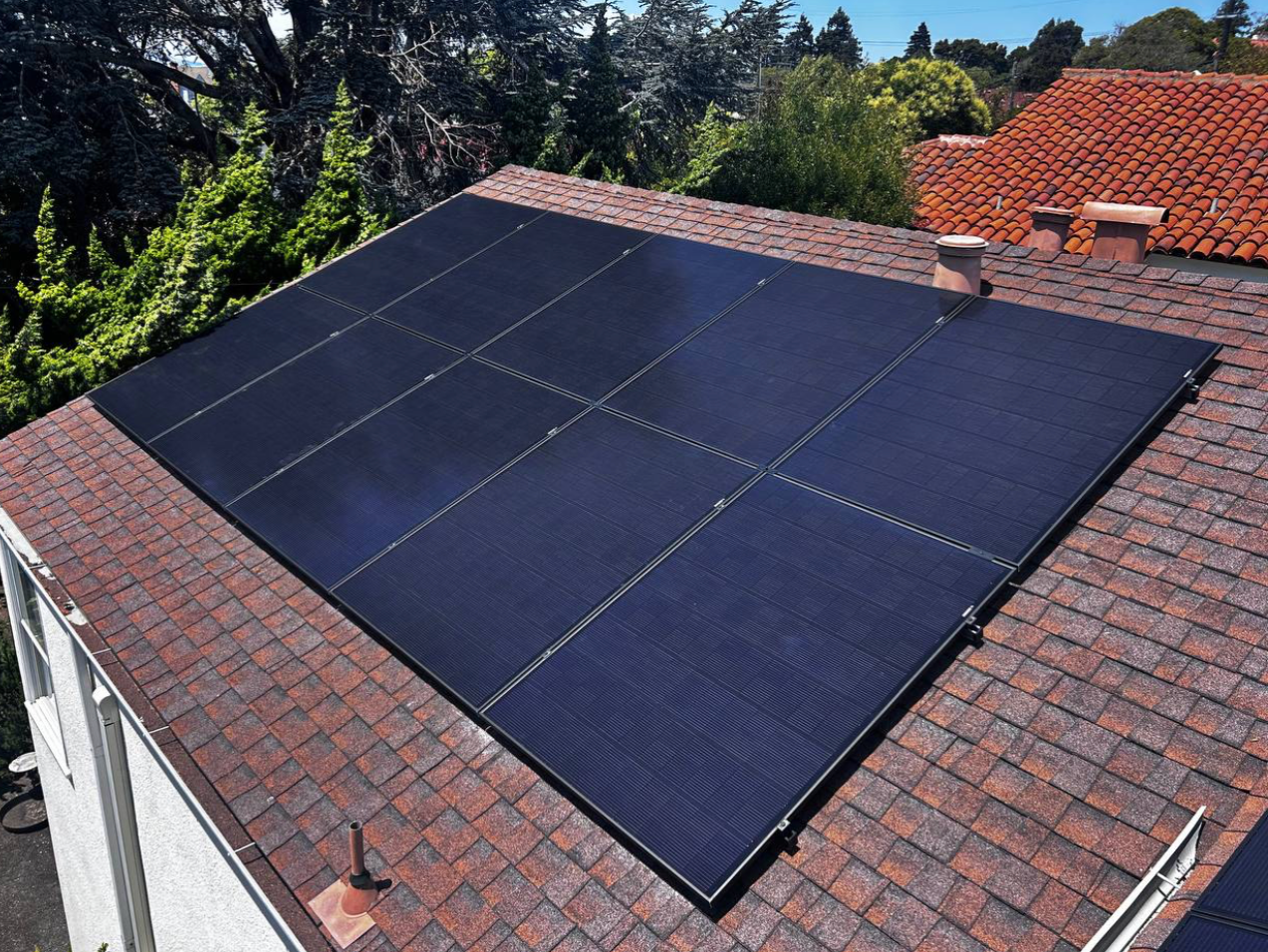
It's a detail most homeowners never think to ask about — until it's pointed out to them. After that, it's hard to look at a rooftop with exposed conduit the same way again.
See the full breakdown →What GOT WATTS does differently
“There is only one way to do something, and that is the right way.”
Jeremy, owner, GOT WATTS Electric & Solar
- Local Contra Costa and Alameda county crews, not a rotating national subcontractor.
- Verified 4.8★ across 451 survey-based Diamond Certified evaluations, Diamond Certified for over 10 years.
- Reachable One consultant, Bill Gurgol, from the first bill review through interconnection, at (925) 967-8949.
- Protected Solar Insure Certified Provider since 2019 and Elite Provider, a status reserved for only a few certified installers nationwide. Every system eligible for SI-30 protection backed by Zurich North America.


Diamond Certified for over 10 years. CALSSA member. Solar Insure Elite Provider.
From DC to AC: The Heavy Metal Way
Microinverters, string inverters, hybrid systems — the conversion path you choose affects shading tolerance, monitoring, battery compatibility, and outage behavior for the next 30 years.
See the full breakdown →The Foundation: Racking & Mounting Hardware
Build Quality: Vetted Panels vs. Budget Surplus
Don't Gamble Your Roof on a 5-Year Installer
A solar array is a 25-to-30-year industrial power plant bolted to your roof. Choosing cheap string components, unverified panels, or a fly-by-night subcontractor who treats your roof like a quick Friday job is a recipe for leaks and orphaned equipment. Protect your investment with Tier-1 engineering, self-healing deck flashing, and vested W-2 craftsmanship backed by institutional stability.
If you've read this far, you've already decided solar is right for you. The only question left is whether you're comparing the invoice in front of you or the true cost behind it.
Verify Your Equipment & Installer Standards Now