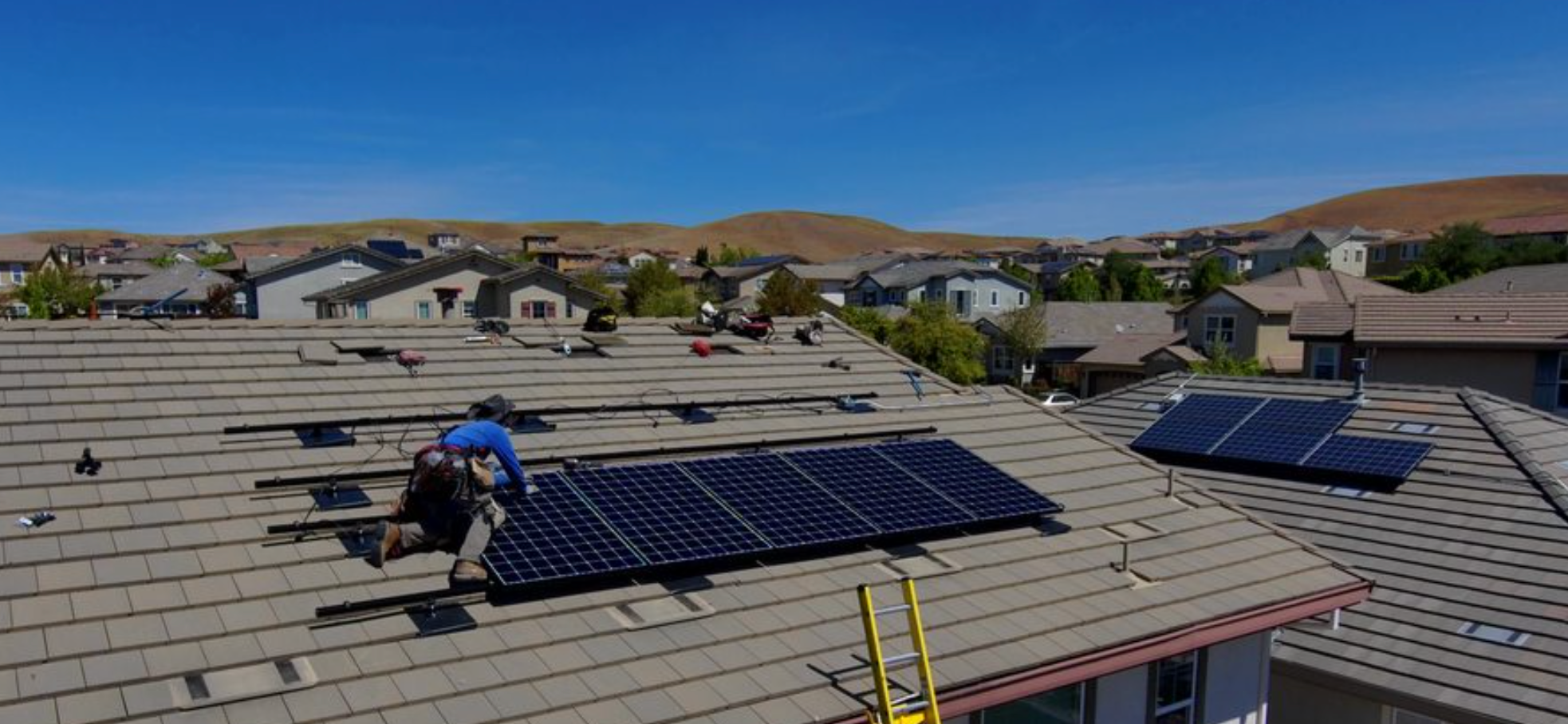
Who Covers the Roof Leak in Year 12?
My roof leaked in year 12 of my solar system, right after the warranty most homeowners have never heard of had already expired.
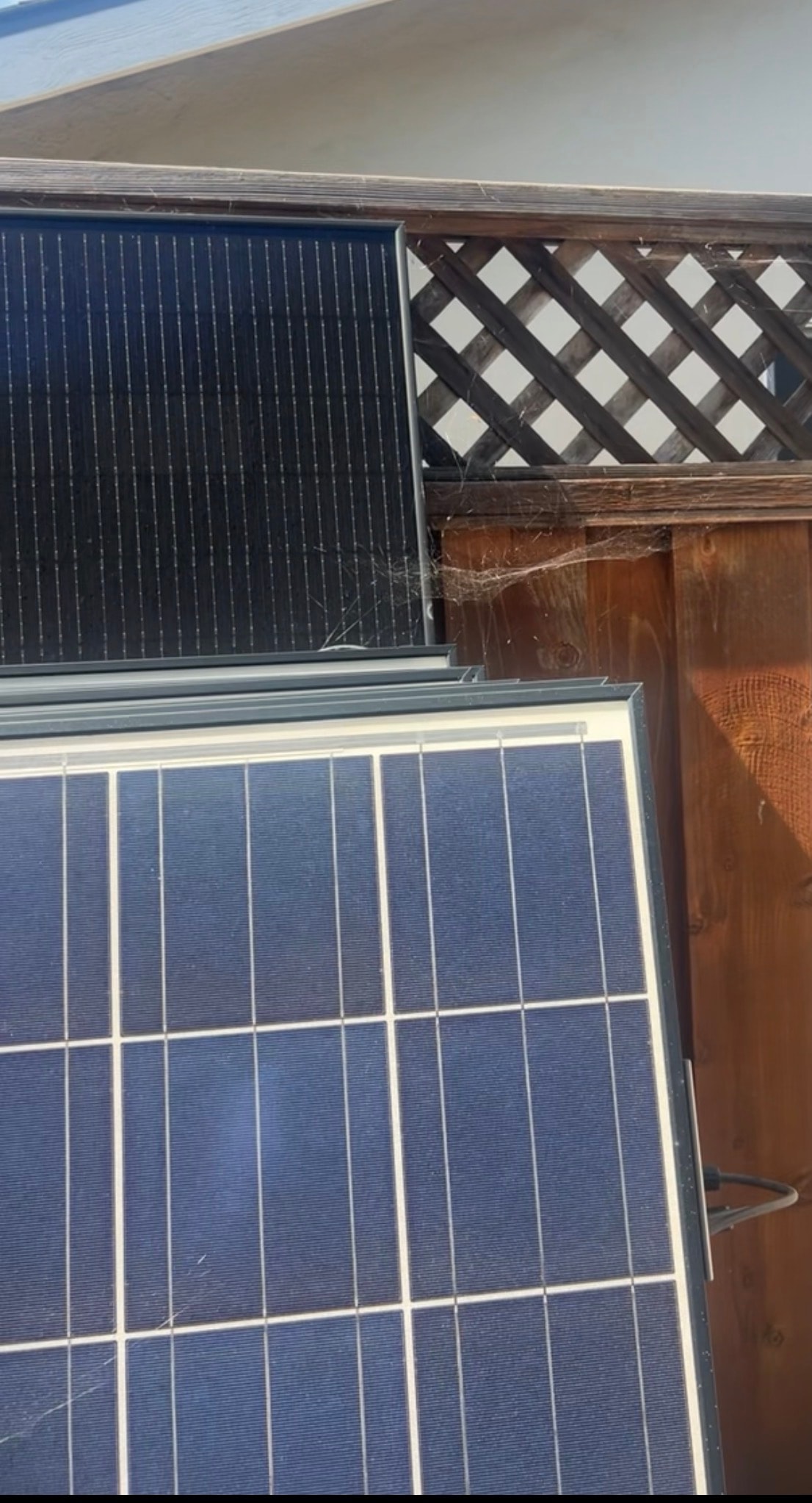
You gotta start somewhere. I went from some of the worst customer care in the business to earning my way into alignment with the absolute best, over 12 years.
Here's what most homeowners don't know: there isn't just one warranty on your solar system, there are three. The panels carry a 25 to 30 year manufacturer warranty. Most installers also offer a workmanship warranty, typically around 10 years, covering whether the job itself was done right. But there's a third piece almost nobody talks about: the roof intrusion warranty, the specific coverage for the roof itself around each mount point, where the panel actually penetrates your roof. That's the one that matters most years down the road, and it's the one my own roof leaked without.
My roof leaked at year 12, right about when that kind of coverage usually runs out.
Part of the reason Tesla gets so much solar business is brand recognition. People assume that because Tesla makes a good car, the solar experience will be just as good. I want to be clear about something first: going solar has been one of the best financial decisions I've ever made, and I have zero regrets. The savings paid for themselves years ago and they haven't stopped since.
Roof leaks are a real thing, and that's exactly why workmanship from experienced installers can make a big difference. In my case, though, it wasn't the workmanship. It was the cheaper mounting hardware that failed. The sealant hardened, the support beam underneath wanted to shift, and something had to give. My roof was overdue for a replacement. I don't typically climb up there to check on it, so it wasn't obvious, but 25 years goes by fast. I put it off for too long and I suffered the consequences. I've since learned these Zep mounts appear built to protect your roof for just over 10 years.
I am most confident in the mounting hardware and the workmanship of my teammates. You're only as good as the people you surround yourself with, and your home is too valuable an asset to hand to anyone but the best. Why wouldn't you treat it like a castle?
Here's what actually caused it: the ground settles over time, and the sealant under the mounts hardens right along with it. The hardware on my system is Zep mounting, a rail-less system SolarCity acquired in 2013 that Tesla still uses today. When I was first learning this business, one of our selling points was that the sealant inside these mounts was the same kind used to send spacecraft into orbit. What nobody tells you is that even sealant like that hardens and cracks eventually, worn down by thermal expansion, ground settling, and years of rainwater washing away the protective granules on the shingles right around the mount. Each mount is just a puck filled with sealant, drilled straight into the 2x4 or 2x6 underneath your roof. When that puck tilts a little, whether the ground settles or the wood itself moves on its own, water finds a way in. Nature has its way.
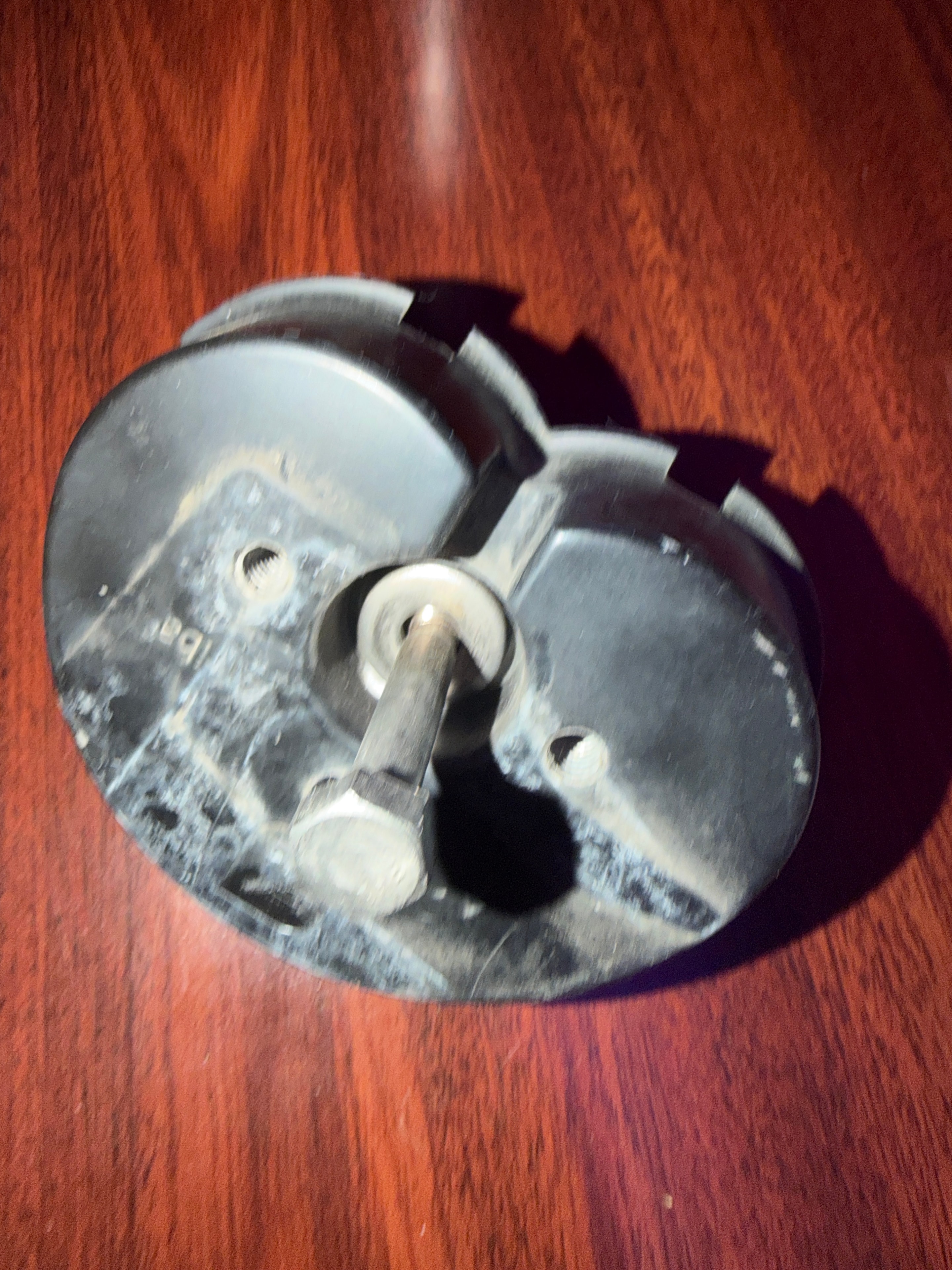
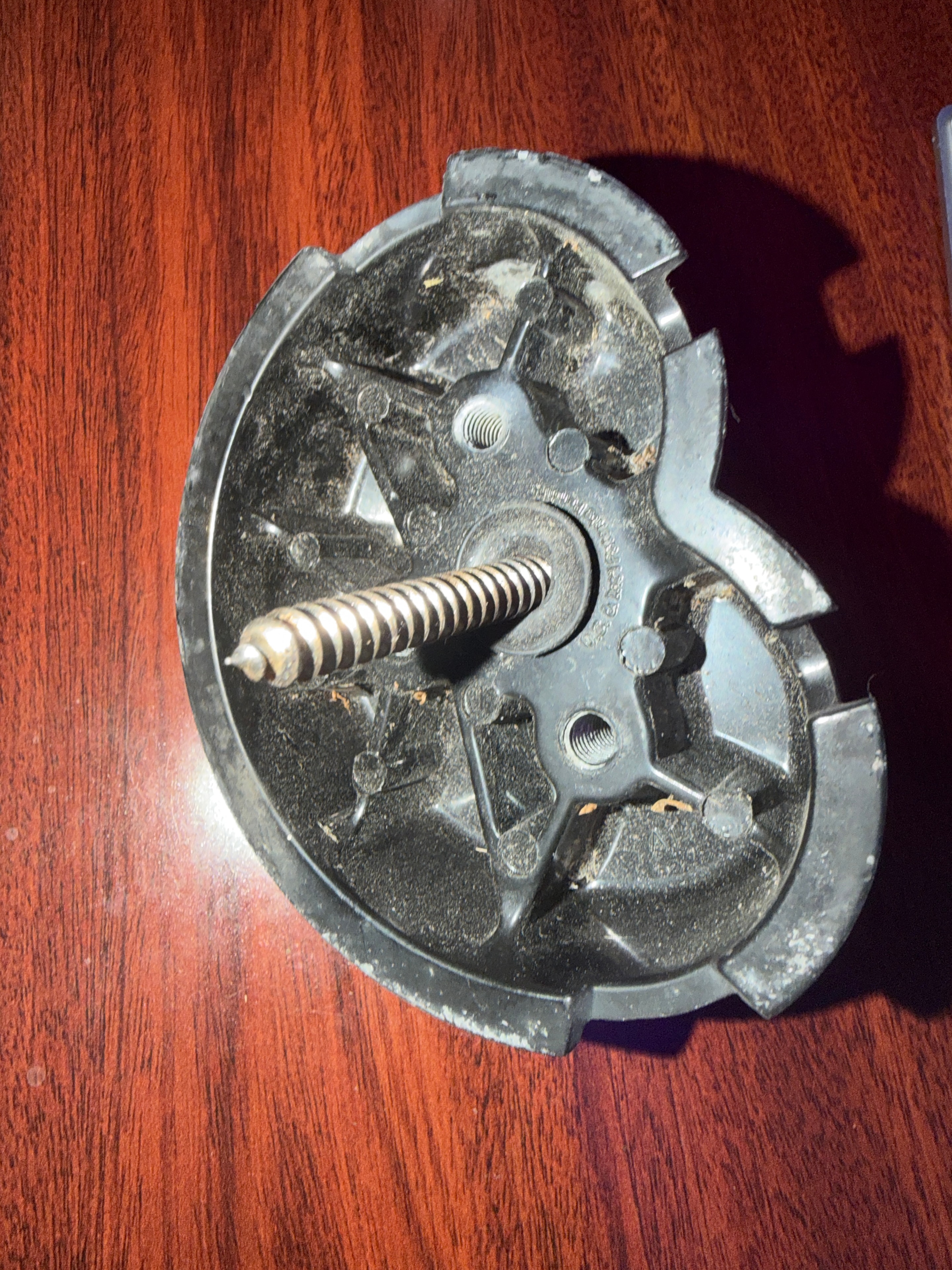
This is what came off my own roof after twelve years. Every mount on every solar system looks just like this underneath, eventually.
When the roofer told me he needed the panels off to find the leak and fix it, I called Tesla right away. They told me it would be three to five months before they could send anyone out to remove them. My wife and I couldn't leave water pouring into our living room that long, so I called my friend Keith Burgad, founder of Power Solar in Stockton, and hired him instead to remove the panels. He came out right away, maybe even the same day I called him. That's five star service. Once the panels were off, the roofer confirmed what I suspected: the leak was coming from underneath one of the mounts.
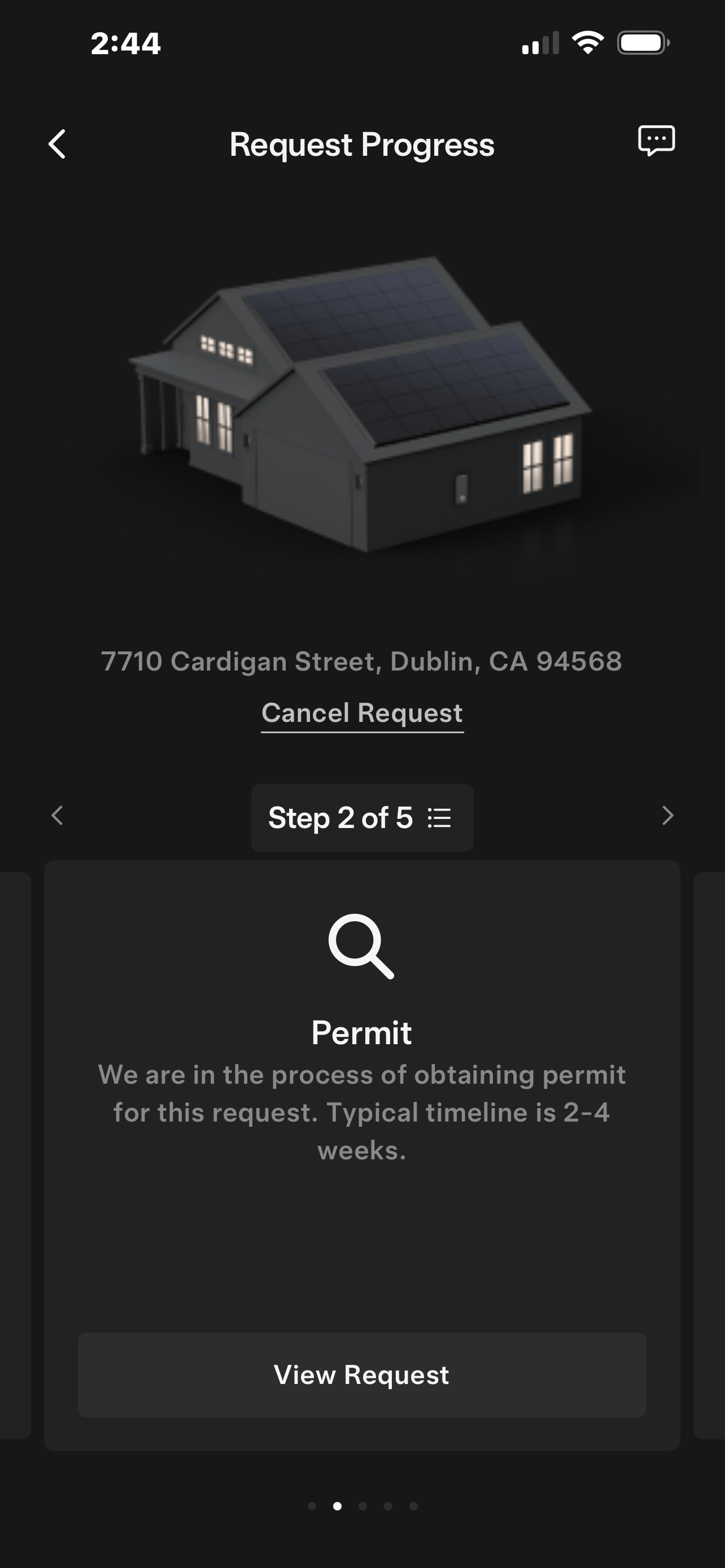
Getting the panels back on took four months. First Tesla told me they were waiting on the permit, so I called the City of Dublin myself and asked if it had been submitted. It hadn't. When I called Tesla back and told them that, they put me on hold for ten minutes and came back saying whoever gave me that update must have misread their notes, the permit hadn't actually been submitted yet, they were still working on it. Weeks went by. Tesla told me it was finally submitted, and from there I called every week, about thirty minutes each call, just to check on where things stood. Along the way I spoke with ten different reps. Every one of them told me they'd get back to me later that day or within a week. None of them ever did.
Along the way, one of the reps told me something that explained a lot: notes don't carry over between their customer care team and the team that handles removal and reinstall. Two different systems, two different groups, and neither one could see the history I already had with the other.
The panels being off my roof didn't mean my lease payments stopped. For the five months I had no energy being produced, I still paid my normal lease payment of right around $100 a month, and I missed out on producing more than $1,000 worth of electricity I would have otherwise made. We usually call that number the cost of doing nothing when we're talking to a prospective solar customer. In my case, it was the cost of Tesla doing nothing to solve my problem, despite hours on the phone with reps trying to get some kind of action.
The scheduling wasn't much better. When the first appointment finally came around, the crew showed up with a work order to remove the panels, the ones that had already been off my roof for months. We had to reschedule. All I could do was laugh.
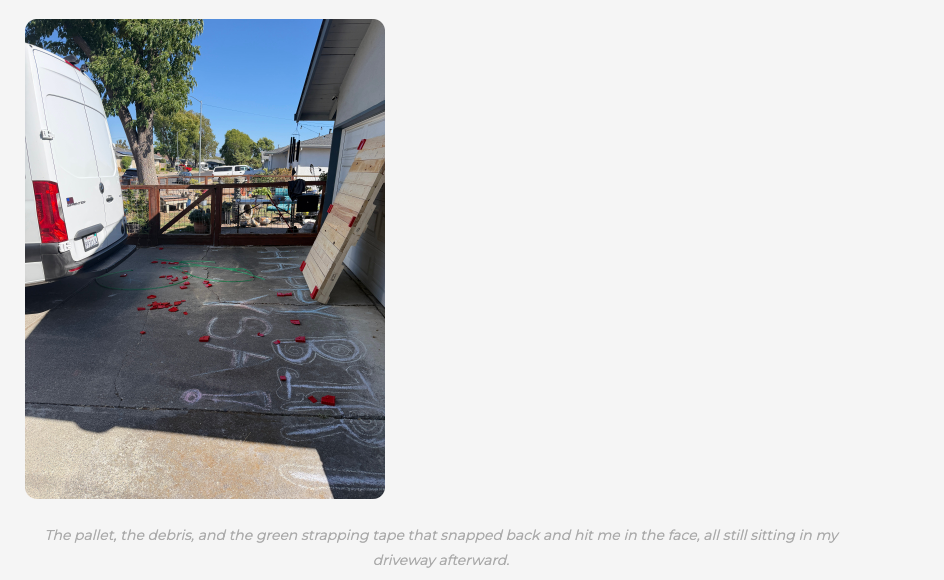
The next appointment, the installers actually showed up on time and waited, but the panels themselves never did. The subcontractor responsible for delivering them was thirty minutes away in Tracy, and apparently sending someone to go get them wasn't worth anyone's time, the kind of thing a local installer would have just handled. The panels finally arrived around five o'clock. I was home alone. The truck driver told me he doesn't move equipment, and that this was the first time he'd ever picked up a delivery from Tesla. So I unloaded and carried the panels myself. When I cut the plastic tape holding them down, it snapped back and hit me in the face. He left a wooden pallet, close to 75 pounds itself, leaning against my garage door, along with plastic packaging scattered across the driveway. Carrying one of the fifty pound panels, I stumbled and fell.
When I told a customer care rep what happened, the response was that they don't credit for that kind of experience, it doesn't matter, when was I going to pay. Around the same time, I caught a billing error. My original contract with SolarCity clearly included both removal and reinstall, but Tesla had billed me for both separately. I caught it before the reinstall happened, but the error in their system wouldn't let the second truck roll get scheduled until it was fixed. After a couple of weeks, they found a workaround to get the install scheduled anyway, but the double billing itself didn't go away, it was still sitting on my account even after the installation was done.
I'd been waiting on the final inspection so I could get my other solar panels turned on too, the second and third systems I've since installed, twelve panels total, producing close to what my original twenty panels did. For the last two months, I held off getting them installed because I believed Tesla needed a city inspector to sign off on the permitted work first. A couple of days ago, I found out no inspection was ever going to happen, because no permit was ever pulled in the first place. That one piece of miscommunication cost me two extra months of production from close to half of my panels. More laughs.
Keith is now putting up my second and third systems too. I missed four of the best eight months of the year for production. It could have been a lot worse — and I just found out within the last couple of days that Tesla never actually needed the permit inspection at all. Those panels sat on the side of my house for two extra months because of a miscommunication inside Tesla's own organization. My original system is now fully working.
Looking back, my warranty did what it was supposed to do. That's what I signed up for, and the contractual obligations were kept. They charged me exactly what they said they would. What's fascinating is that it still took four months to get my original system back online, and even longer to untangle the rest. Most of the customer care and removal and reinstall reps I talked to along the way genuinely seemed like they wanted to help. They just didn't have the fluid communication a team like ours can offer. They seemed to be doing their best inside a process that came with being bought out, not one they built themselves.
In 2014, before I ever helped any other family go solar, I was my own first customer. I put panels on my own roof because I believed in the technology enough to bet on it myself. I've always believed in the idea that it's good to be buying what you're selling.
It's been mostly a good experience aside from that. Before the roof leak, I also had to pay a few hundred dollars out of pocket to get my Tesla Powerwall repaired, even though it was still inside the 10 year warranty. The warranty covered the equipment, but not all of the labor Tesla required to do the work. None of this is a big deal in the scheme of things. I've saved literally thousands of dollars over the years, and that's never been in question.
My PG&E bill in June, while the panels were off, was about $400. This month, with solar back up and running, it'll be close to $24, the fixed minimum delivery charge PG&E now charges every customer regardless of how much solar you produce. That's the whole story in one number. Whatever it took to get here, this is why it was worth it.
That's exactly why I partner with GOT WATTS today. Through Solar Insure, underwritten by Zurich North America, GOT WATTS backs every roof intrusion with a 30 year warranty, not 10. I don't know of another company in the business offering that kind of peace of mind.
If you're weighing a quote right now, don't just ask what the panels are rated for. Ask who's still going to answer the phone in year 12, and what they'll actually cover when they do.
Ready to talk it through? Call or text me directly at (925) 967-8949, or book your free energy consultation below.
Explore Topics
Written by
Bill Gurgol
Content creator and writer sharing insights and stories.